



Over 64% of existing synthetic running tracks nationwide are past their optimal service lifespan and scheduled for resurfacing within 5 years, according to American Sports Builders Association (ASBA) 2026 industry data.
Traditional latex and low-grade PU tracks only last 8–10 years before cracking, fading, and losing shock absorption, while premium wet-pour systems rely entirely on high-quality colored EPDM granules for the top wear layer.
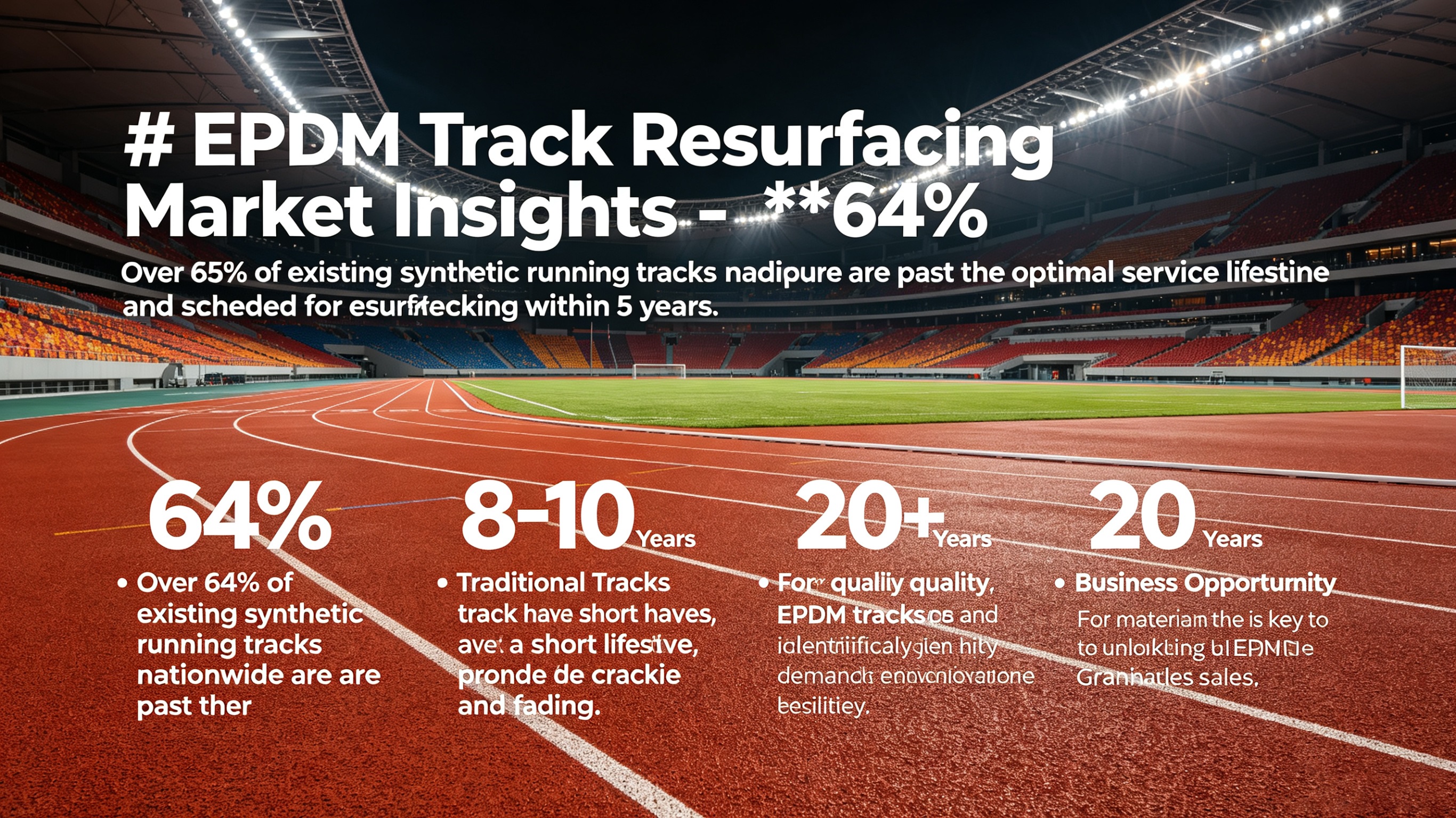
For material suppliers, importers, and track installers, identifying high-demand renovation facility types directly unlocks bulk EPDM granule sales.
This data-backed guide breaks down every category of U.S. sports venue that urgently requires track resurfacing and new EPDM raw materials.
1. K-12 Public & Private High School Athletic Facilities (Largest EPDM Renovation Demand)
Core Market Data
• There are over 98,000 public K-12 schools with outdoor running tracks across the United States.
• 71% of U.S. high school tracks were installed between 2010–2016, meaning they have reached the 10-year replacement threshold for latex-bound surfaces.
• Average resurfacing project for a standard 6-lane high school track consumes 12–18 tons of colored EPDM granules.
Why These Venues Must Renovate
1. Safety Compliance Mandates: State education codes require minimum shock absorption to reduce youth sports injuries. Worn tracks lose elasticity, raising knee/ankle injury risk by 43% and triggering safety inspection failures.
2. UV Degradation: Low-grade old surfaces fade, crack, and shed rubber particles; school districts now specify virgin EPDM granules for UV stability and 15+ year color retention.
3. Budget Cycle Windows: 68% of U.S. school districts allocate sports facility renovation funds every 4–6 years, with 2026–2027 seeing record school infrastructure spending of $11.2 billion nationwide.
Renovation Signals to Target
• Tracks with surface cracking, peeling rubber, faded lines, or exposed asphalt base
• Schools hosting regional youth track-and-field competitions needing USATF-compliant surfaces
• Districts replacing latex tracks with porous EPDM systems for superior drainage in rainy climates
2. College & University NCAA Athletic Stadiums (High-Volume Premium EPDM Orders)
Core Market Data
• Roughly 1,400 NCAA Division I, II, and III universities maintain full 8-lane 400m competition tracks.
• 52% of collegiate tracks are 12–18 years old, overdue for full resurfacing; a single university renovation uses 22–30 tons of high-purity EPDM granules.
• College track resurfacing budgets average $520,000–$800,000 per project, with 35% of total material costs allocated to colored EPDM wear layer granules.
Key Renovation Drivers
1. NCAA Competition Standards: Official events demand consistent traction, shock absorption, and uniform surface texture only achievable with new virgin EPDM top layers.
2. Athlete Recruitment Branding: Modern vibrant EPDM track colors improve campus athletic facility appeal, a critical selling point for student athlete recruitment.
3. Lifecycle Cost Reduction: Universities shift from short-lived PU coatings to EPDM surfacing, cutting annual maintenance expenses by 41% over a 20-year lifespan.
Target Venue Types
• Division I flagship university main stadiums hosting state and regional collegiate meets
• Small liberal arts colleges with aging 10+ year-old latex training tracks
• Community college sports complexes expanding athletic programming
3. Municipal Community Sports Parks & Public Recreation Centers (Steady Small-to-Mid EPDM Orders)
Core Market Data
• Over 16,000 city-managed public recreation parks feature outdoor running tracks across the U.S.
• Local government capital improvement plans include track resurfacing for 59% of public park facilities between 2026–2030.
• Community park tracks are smaller (4–6 lanes), consuming 6–10 tons of EPDM granules per renovation project.
Why They Prioritize EPDM Resurfacing
1. Liability Risk Reduction: Worn slippery surfaces lead to costly slip-and-fall lawsuits; EPDM delivers wet SCOF ≥0.6 anti-slip ratings required by municipal safety codes.
2. Permeable Drainage Benefits: 62% of U.S. cities waive expensive stormwater fees for porous EPDM track systems, a major budget incentive for local governments.
3. Multi-Use Foot Traffic: Public tracks see daily jogger, youth sports, and fitness class use, requiring durable EPDM that resists heavy foot traffic and freeze-thaw seasonal damage.
High-Renovation Zones
• Suburban residential community parks with original asphalt or thin latex tracks
• Urban downtown recreation complexes built pre-2012 with degraded surfacing
• Rural county fairgrounds hosting annual amateur track meets
4. Private Commercial Sports Complexes & Training Academies (Fast-Turnaround EPDM Demand)
Core Market Data
• The U.S. private athletic training center market grows 7.2% annually, with more than 3,200 commercial track-and-field training facilities operating nationwide.
• Private operators renovate tracks every 8–12 years to maintain premium rental pricing; new EPDM surfaces allow venue owners to charge 15–20% higher hourly rental fees.
Renovation Triggers
1. Competitive Edge: Commercial training facilities rely on USATF-certified EPDM tracks to attract elite youth and amateur athletes away from public parks.
2. Maximized Revenue Lifespan: EPDM’s 20–25 year service life eliminates repeated mid-term repair shutdowns that cut rental income.
3. Low Ongoing Upkeep: Private operators prioritize EPDM to slash monthly cleaning and repair labor costs compared to traditional PU surfaces.
Facility Subtypes
• Elite track-and-field training academies for high school and college recruits
• Multi-sport private parks with combined running tracks, turf fields, and fitness zones
• Event-only commercial venues hosting seasonal track competitions and sports camps
5. Professional & Regional Competition Stadiums (Large Bulk EPDM Contracts)
Core Market Data
• Over 200 professional and regional championship stadiums host annual USATF sanctioned track events across the U.S.
• Major stadium track overhauls require 35–50 tons of premium virgin EPDM granules, representing high-value bulk material orders for suppliers.
• 2026–2028 features a wave of professional sports venue modernization totaling $18.4 billion in U.S. stadium construction/renovation spending.
Mandatory Renovation Rules
World Athletics and USATF certification standards ban heavily worn, faded, or cracked track surfaces for official competitions. Stadium operators must fully resurface with fresh EPDM granules to retain event hosting rights.
Venue Examples
• NFL/MLB multi-purpose stadiums with integrated track-and-field ovals
• Regional championship athletic complexes hosting state-level track tournaments
• Olympic training satellite facilities with high-intensity daily professional athlete use
6. Senior Living & YMCA Fitness Campus Tracks (Niche Recurring EPDM Demand)
Core Market Data
• More than 7,500 YMCA branches and 12,000 age-restricted senior communities maintain outdoor jogging/training tracks.
• These low-to-medium traffic facilities renovate tracks every 10–14 years, requiring 4–7 tons of EPDM granules per project.
Unique Renovation Needs
EPDM’s soft shock absorption reduces joint strain for older adults and casual walkers, a mandatory safety feature for ADA-compliant senior fitness spaces.
Aging hard latex tracks fail accessibility safety audits, forcing facility operators to upgrade to EPDM surfacing.
Key Market Stats for EPDM Granule Suppliers
1. Average total annual U.S. track resurfacing volume: 147,000 tons of colored EPDM granules consumed nationwide.
2. 71% of renovation projects specify virgin colored EPDM for the top wear layer, rejecting low-cost recycled SBR alternatives.
3. Facilities located in hot southern states (Texas, Florida, California) account for 42% of all EPDM track renovation demand due to accelerated UV track degradation.
4. A single full 8-lane 400m track resurfacing order generates enough EPDM granule sales to cover 3–5 small community park projects.
Conclusion
K-12 schools, NCAA universities, municipal parks, private training academies, professional competition stadiums, and YMCA/senior fitness campuses form six core facility categories with urgent track renovation demand in the U.S. market.
All these venues depend on fresh, high-quality EPDM granules for durable, safe, regulation-compliant running track surfaces.
With two-thirds of America’s existing synthetic tracks reaching the end of their service life by 2031, suppliers and installers targeting these six facility segments will capture consistent, large-volume EPDM granule sales opportunities for years to come.
