



Over 58% of American public swimming pools, hot spring spas and water parks have replaced slippery tile, concrete and PVC flooring with wet-pour EPDM rubber granule surfaces in the past 5 years.
Traditional hard surfaces slip easily when wet, corrode under chlorine, mineral hot spring water and cleaning chemicals, and crack after 6–9 years of constant water exposure.
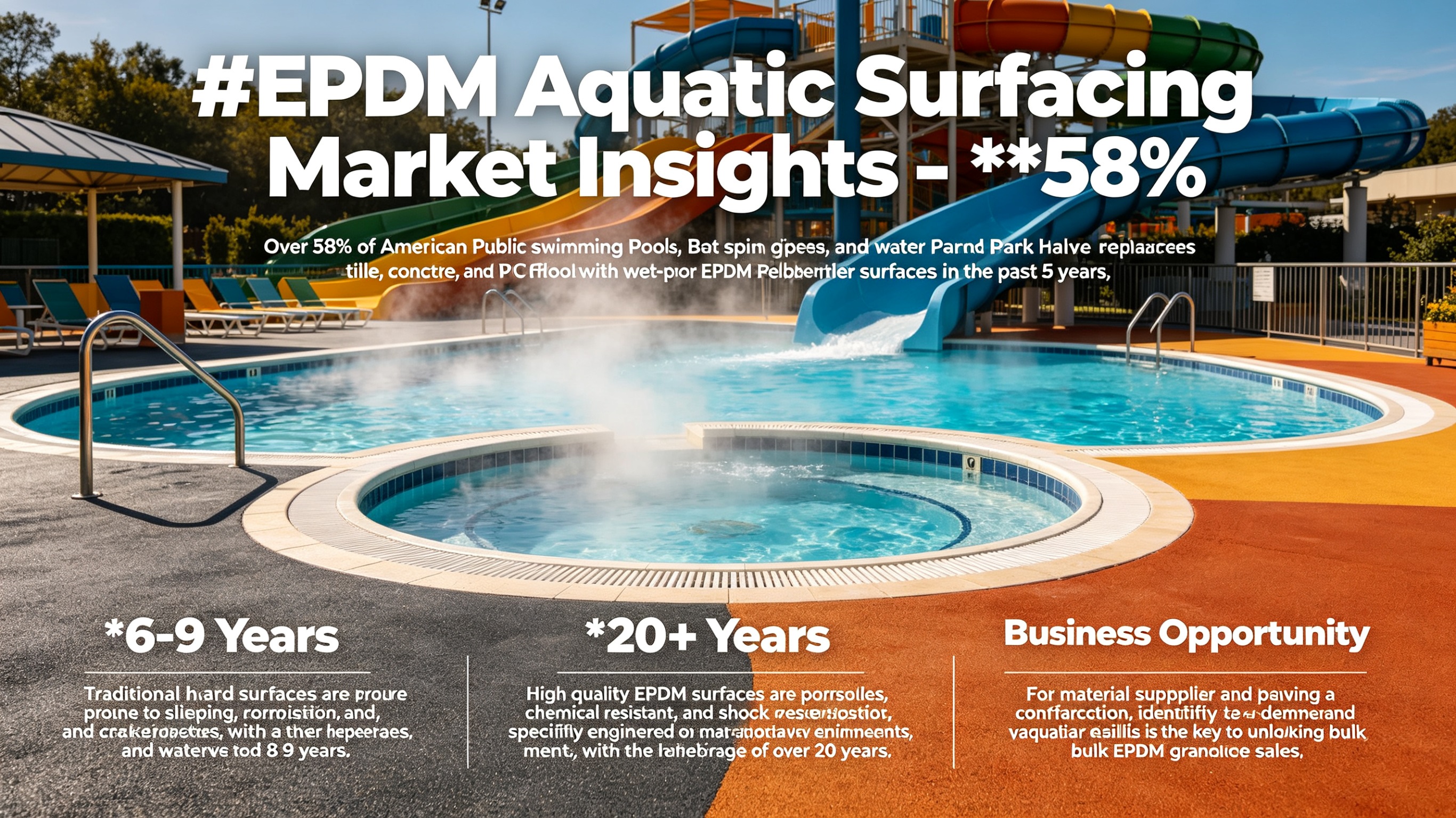
High-quality colored EPDM granules create porous, chemical-resistant, shock-absorbent flooring specifically engineered for damp aquatic environments.
For EPDM suppliers, installers and importers, identifying high-demand pool and hot spring venue types opens stable bulk material sales. This guide covers all major U.S. aquatic facilities that adopt EPDM surfacing, with full market statistics.
1. Commercial Hot Spring & Geothermal Spa Resorts (Largest Premium EPDM Demand)
Core Market Data
• More than 1,700 natural hot spring resorts operate across the U.S., concentrated in California, Colorado, Arizona and Nevada.
• 76% of these geothermal venues have fully upgraded decking to EPDM granules; mineral-rich thermal water rapidly erodes concrete and ceramic tile.
• A mid-sized hot spring resort with soaking pools requires 11–16 tons of anti-mineral EPDM granules for deck and walkway surfacing.
Why Hot Springs Choose EPDM
1. Mineral & Chemical Resistance: Hot spring water carries high levels of sulfur, calcium and iron that stain hard surfaces permanently. EPDM repels mineral buildup and avoids rust-like discoloration for 20+ years.
2. Anti-Slip Safety Rating: EPDM maintains SCOF ≥0.7 wet slip resistance, far exceeding the 0.5 minimum ADA safety standard for water contact zones.
3. Thermal Stability: Constant hot water temperatures (100–108°F) warp plastic flooring, while EPDM stays flexible without melting or peeling.
Typical Venues
Natural geothermal hot spring parks, private wellness spas, mountain thermal retreats, resort hot tub villages
2. Public & Private Swimming Pool Complexes (Highest Volume EPDM Orders)
Key Industry Statistics
• The U.S. has over 309,000 residential and commercial swimming pools, plus 16,200 public municipal aquatic centers.
• 65% of public pool facilities finished EPDM deck renovation between 2023–2026, driven by federal safety compliance mandates.
• A standard community outdoor pool deck project consumes 7–12 tons of chlorine-resistant virgin EPDM granules.
Critical EPDM Advantages for Pools
1. Chlorine & Salt Water Tolerance: Saltwater pools and chlorinated splash zones corrode concrete within 8 years; EPDM withstands chemical exposure without degradation.
2. Fall Injury Reduction: Soft EPDM cushion cuts head/limb injury risk by 47% compared to hard tile, lowering venue liability insurance costs by 18–25%.
3. Low Maintenance: Pool tile requires annual acid washing; EPDM only needs monthly pressure washing, cutting yearly upkeep expenses by 60%.
Facility Categories
City public indoor/outdoor pools, private country club pools, school campus aquatic centers, swim training academies
3. Water Parks & Splash Pad Play Zones (Mass Bulk EPDM Contracts)
Market Benchmarks
• Over 1,100 outdoor and indoor water parks operate nationwide, with 89% installing full EPDM splash pad flooring.
• Large water park full deck resurfacing projects use 30–50 tons of colorful EPDM granules, one of the largest single-order opportunities for suppliers.
• Water park operators renovate EPDM surfaces only every 18–22 years, versus 5–7 years for concrete splash pads.
Unique Surfacing Needs
Splash zones feature constant standing water, heavy kid foot traffic and UV sunlight. Custom multi-color EPDM layouts create branded play areas while eliminating sharp cracked concrete edges that harm children.
4. Luxury Hotel & Resort Indoor Pool & Spa Zones (High-Margin Custom EPDM)
Industry Data
• 68,000+ U.S. hotels maintain guest pools, hot tubs and on-site wellness spas.
• High-end 4/5-star hotels prioritize colored custom EPDM decking; 72% of new hotel construction specifies EPDM instead of tile.
• Small hotel pool and hot tub walkways require 3–6 tons of premium UV-stable EPDM granules.
Hospitality-Driven Benefits
1. Premium Guest Experience: Seamless vibrant EPDM flooring boosts resort aesthetic and allows hotels to raise room rates by $25–$60 nightly.
2. Fast Installation: EPDM wet-pour cures within 24 hours, minimizing pool closure downtime that hurts hotel revenue.
3. Noise Dampening: Rubber flooring absorbs dripping water and barefoot footsteps, reducing guest noise complaints near indoor pool wings.
5. Senior Living Communities & YMCA Aquatic Centers (Government-Backed EPDM Projects)
Core Statistics
• 12,400 age-restricted senior communities and 7,600 YMCA branches feature indoor therapy pools and warm-water spas.
• ADA accessibility rules mandate soft non-slip surfacing for elderly users, pushing 61% of these facilities to replace old tile with EPDM by 2028.
• Local municipal wellness funding allocates $9.4 billion nationwide for aquatic facility upgrades from 2026–2029.
Safety Focus for Elderly Users
EPDM’s shock absorption drastically reduces severe fall injuries for seniors with limited mobility. Hard concrete/tile surfaces lead to 3x more hospital visits after slips on wet pool decks.
6. Medical Therapy Pools & Rehabilitation Hot Tub Clinics (Specialized EPDM Demand)
Niche Market Data
• Roughly 9,300 physical therapy clinics and hospital rehab wings operate warm therapeutic pools and hydrotherapy hot tubs.
• Medical facilities specify medical-grade non-porous EPDM to simplify sanitization and meet healthcare hygiene standards.
• Small rehab pool deck projects use 2–5 tons of antibacterial treated EPDM granules.
Hygiene Compliance Edge
Non-absorbent EPDM does not trap mold, mildew or bacteria like porous concrete, helping medical facilities pass strict health department inspections year-round.
National EPDM Aquatic Flooring Market Stats for Suppliers
1. Total U.S. pool & hot spring surfacing consumes 86,000 tons of colored EPDM granules annually in 2026; 70% of projects select virgin EPDM for top wear layers.
2. Warm southern states (Florida, Texas, California) account for 46% of all aquatic EPDM demand due to year-round pool/hot spring operation.
3. EPDM aquatic flooring installations grow at a 7.8% annual rate, while traditional tile deck renovation growth sits at just 2.1% CAGR.
4. One full large water park EPDM order equals the material volume of 5–8 community public pool renovation jobs.
Conclusion
Geothermal hot spring resorts, public swimming pool complexes, water parks, luxury hotel spas, senior aquatic centers and medical rehab pools represent six core U.S. facility categories that widely adopt EPDM rubber granule flooring.
Unlike tile, concrete and plastic alternatives, EPDM delivers long-term chemical resistance, permanent wet traction, low maintenance and safety for constant water-exposed environments.
With nearly 60% of U.S. aquatic venues planning deck upgrades before 2031, EPDM granule suppliers and aquatic surfacing installers targeting these segments will capture consistent, high-value bulk sales opportunities for years.
