



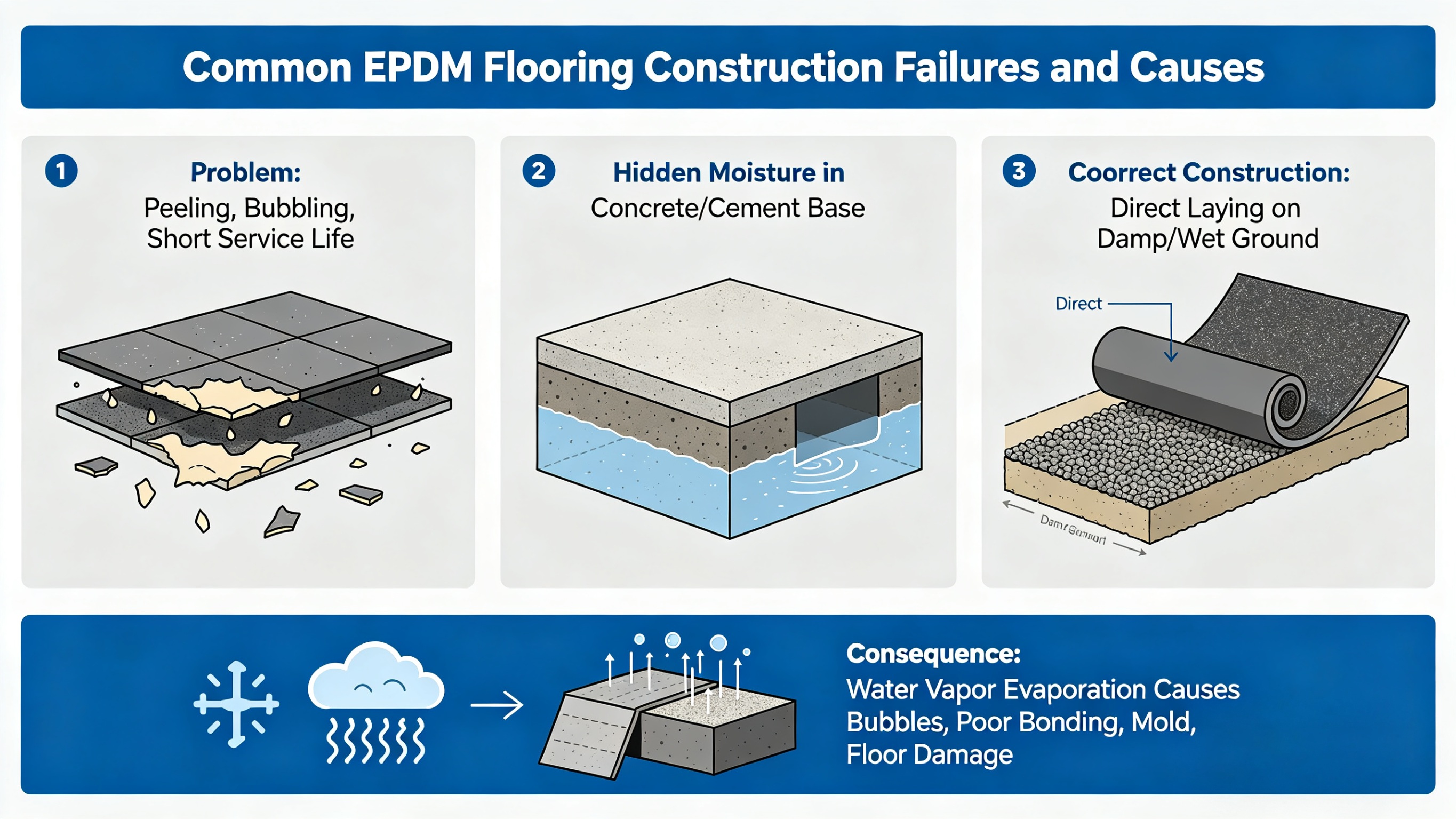
Many EPDM flooring peeling, bubbling, falling off and short service life problems are not caused by poor EPDM granules quality.
Most construction failures happen because builders directly lay EPDM granules on damp, wet, moist ground without proper treatment.
Damp ground contains hidden moisture inside concrete and cement base. If you install EPDM directly on wet surfaces, water vapor will keep evaporating, separate glue from the base, cause bubbles, mold, poor bonding and serious floor damage in a short time.
To make EPDM granules stick firmly, durable, flat and safe on humid ground, you must complete standard ground treatment first.
This article shares professional construction steps for wet and damp surfaces before EPDM laying.
Why Wet Ground Ruins EPDM Flooring
Moisture is the biggest hidden danger for EPDM rubber flooring construction.• Internal water vapor causes glue failure between base and EPDM layer
• EPDM granules easily peel, curl up and crack after rain
• Damp ground leads to mold growth and material discoloration
• Uneven bonding creates hollow floor areas
• Greatly shorten the service life of playground, track and stair EPDM surface
Only fully processed dry ground can guarantee perfect EPDM installation effect.
Step 1: Clean Up Surface Water & Visible Moisture
The first step on damp ground is removing all standing water.• Sweep away puddles, rainwater and accumulated water on the concrete surface
• Use dry mop, blower and cleaning tools to wipe surface moisture completely
• Remove mud, dust, fallen leaves and floating dirt
• Keep the whole construction surface clean and tidy
Do not start any construction while there is obvious water on the ground.
Step 2: Fully Dry the Damp Base Layer
Surface dry is not enough. The inner concrete layer still stores large amounts of moisture.
• Use industrial hot air blower to blow the ground repeatedly
• Keep natural ventilation for 1 to 3 sunny days to evaporate deep moisture
• Avoid construction on rainy days, cloudy humid weather and morning dew time
• Make sure the cement base stays dry all day long
Qualified dry standard: no dark wet marks, no cool damp feeling when touching the ground.
Step 3: Repair Cracks, Pits and Uneven Ground
Wet ground usually has loose cement, small holes and uneven areas.
• Fill cracks and pits with professional repair mortar
• Level bumpy areas to keep the base flat and solid
• Remove loose cement skin that easily falls off
• Ensure the whole ground has stable bearing capacity
Flat solid base directly improves EPDM laying effect and anti-slip performance.
Step 4: Apply Waterproof Primer for Damp Ground
This is the most critical step for humid surface construction.
Even if the ground looks dry, underground moisture still spreads upward.
Brushing waterproof sealing primer can:
• Block upward water vapor penetration
• Enhance adhesion between ground and EPDM adhesive
• Prevent bubbling and hollowing after installation
• Improve overall floor waterproof performance
Paint primer evenly and wait for full curing before next process.
Step 5: Check Humidity Again Before EPDM Paving
After all ground treatment, make one final humidity inspection.
• No water seepage, no moisture return
• Dry, hard, clean and non-slip base surface
• Weather stable without upcoming heavy rain
Only when all conditions meet standards can you mix glue and start paving EPDM rubber granules.
Common Mistakes on Wet Ground EPDM Construction
1. Lay EPDM directly on slightly damp ground for saving time2. Skip primer treatment on humid base
3. Construction on rainy days and high humidity environment
4. Ignore deep internal moisture of concrete
5. Rush installation without enough drying time
These wrong operations will definitely cause later maintenance problems.
Benefits of Standard Damp Ground Treatment
• EPDM granules bond tightly without peeling or bubbling• Longer flooring service life
• Better shock absorption and anti-slip effect
• Reduce later repair cost
• Keep beautiful color and flat surface for years
• Avoid mold and damp material deterioration
Conclusion
Damp wet ground cannot directly install EPDM granules.The correct process order is: drain water → clean surface → fully dry base → repair ground → brush waterproof primer → final humidity check → official EPDM laying.
Proper base preparation accounts for more than half of EPDM construction quality.
Good ground treatment guarantees stable, safe and long-lasting EPDM rubber flooring for playgrounds, running tracks, stairs and outdoor sports areas.
