



EPDM (Ethylene Propylene Diene Monomer) single-ply rubber membrane stands as one of America’s most trusted flat roof waterproofing solutions, capturing 35% of the U.S. single-ply roofing market with over 1 billion square feet of new EPDM roof installed nationwide every year, per EPDM Roofing Association 2026 data.
The U.S. EPDM rubber membrane market hit $2.5 billion value in 2024, forecast to expand at a steady 5.0% CAGR through 2034, as property owners prioritize long-term leak resistance amid extreme U.S. weather: Southwest heatwaves, Midwest freeze-thaw cycles, Northeast heavy snow, and Southeast hurricane rainfalls.
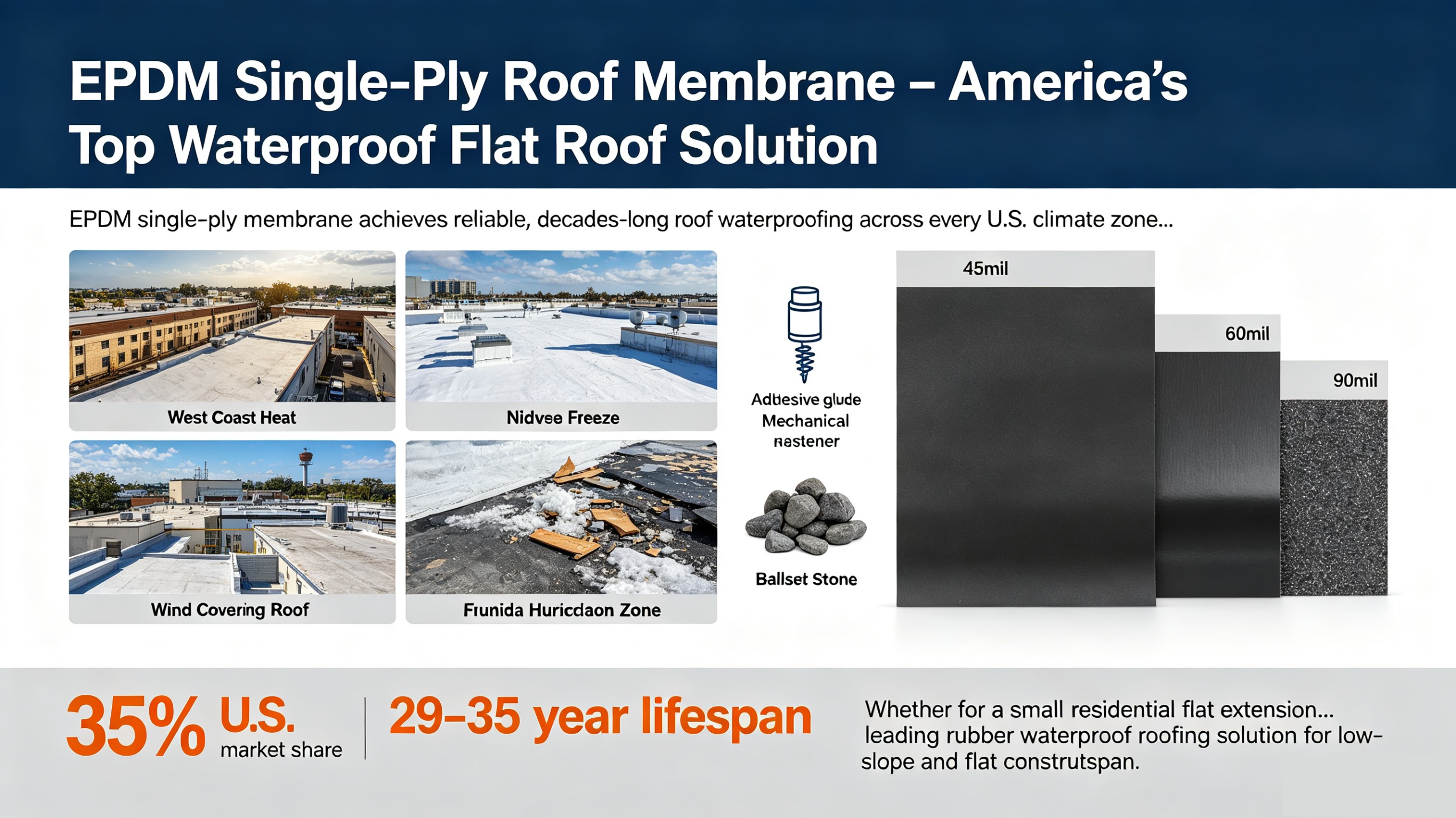
Decades of field testing confirm properly installed EPDM delivers 25–35 years of waterproof service life; over 70% of America’s earliest 1980s EPDM roof systems remain leak-free without full membrane replacement after 40+ years of exposure to harsh regional climates.
This guide breaks down exactly how EPDM achieves seamless, long-lasting roof waterproofing for U.S. construction projects, step-by-step installation techniques, regulatory standards and verified performance data.
1. US Official Standards Governing EPDM Waterproof Roof Systems
All professional EPDM waterproof builds in America must comply with national testing and design codes to guarantee leak resistance:
• ASTM D4637: Mandatory specification for EPDM single-ply roof membrane raw material, setting minimum tensile strength, elongation (minimum 300% stretch) and water impermeability benchmarks.
• FM 4470 Class 1 Roof Cover Approval: Required for commercial warehouses, retail and industrial roofs, validating wind uplift and puncture resistance critical for storm-prone states like Florida, Texas and North Carolina.
• ASTM D5491 / D6733: Adhesive performance standards for solvent and water-based glues used to seal EPDM seams and substrate bonds, the most vulnerable waterproof failure point.
• NRCA (National Roofing Contractors Association) publishes official installation manuals that standardize waterproof detailing for flashings, drains, HVAC penetrations and parapet walls across all U.S. climate zones.
Certified U.S. EPDM thickness grades for waterproofing:
1. 45 mil (1.14mm): Standard residential garage, extension and low-traffic flat roofs
2. 60 mil (1.52mm): Most popular commercial & exposed residential waterproof grade (82% of U.S. commercial EPDM installs choose 60 mil)
3. 90 mil (2.28mm): Heavy-duty industrial rooftops with heavy foot traffic, hail-prone mountain and Midwest plains regions
2. Three Proven EPDM Waterproof Installation Systems Used Across the USA
Every system delivers full waterproof protection, engineered for different roof sizes, structure loads, wind zones and budget ranges.
Fully Adhered (Glued-Down) EPDM Waterproof System
The highest-performance waterproof option for complex-shaped roofs, high-wind coastal zones (Florida, California, New England) and LEED green buildings.
Waterproof Construction Steps
1. Prep substrate (concrete, metal, wood deck): Fully clean, dry, free of grease, debris or old asphalt residue — poor prep causes 7%+ delamination leaks in humid Florida installations.
2. Roll insulation boards, seal all insulation joints with butyl tape to block hidden moisture intrusion under the membrane layer.
3. Apply bonding adhesive evenly to both insulation surface and EPDM sheet underside at 40–60 oz per square foot application rate.
4. Once adhesive reaches tack state (90–120 minutes), lay EPDM flat and compress firmly with a 150lb weighted roller for 100% contact bond.
5. Overlap adjacent EPDM sheets by minimum 6 inches; seal splice edges with pressure-sensitive seam tape + liquid lap sealant to create a fully impermeable barrier.
6. Install custom EPDM flashings around vents, pipes, skylights and parapets, double-sealing all transition points.
Key US Market Data
• Installed cost: $4.50–$7.50 per sq ft; premium fully adhered systems run $6–$9.50/sq ft for 90 mil heavy membrane
• Wind rating: Up to 180 mph, meeting Florida Miami-Dade hurricane building code requirements
• Market share: 38% of U.S. commercial EPDM waterproof projects in 2026, top choice for LEED-certified facilities (80% of LEED builds specify adhered EPDM)
3. How EPDM’s Material Properties Lock Out Water in Extreme US Regional Climates
EPDM’s chemical composition delivers inherent waterproof and weather resistance unmatched by modified bitumen or basic BUR (built-up roofing):
1. 300%+ elastic elongation:
Absorbs thermal expansion/contraction from -20°F Midwest winter frost to 120°F Southwest roof surface heat; no cracking or split seams that create leak points — bitumen roofs crack 3x more frequently under identical temperature swings.
2. Zero water absorption rate:
ASTM lab testing confirms pure EPDM absorbs less than 0.01% water by weight, even after decades of rain, snow melt and high humidity.
3. Ozone & UV stability:
Unlike cheaper rubber blends, U.S.-spec ASTM D4637 EPDM resists UV breakdown; uncoated black EPDM maintains waterproof integrity for 30+ years in Arizona, California and Texas full sun exposure.
White reflective EPDM (ENERGY STAR compliant) cuts roof surface heat by 40% while retaining identical waterproof performance, adding $0.75–$1.25/sq ft to material cost.
Regional Waterproof Performance Stats
• Southeast (FL, GA, SC) Hurricane Zones: Fully adhered 60 mil EPDM systems see only 2.1% leak failure rate over 20 years, vs 8.9% failure for modified bitumen roofs after tropical storm exposure.
• Midwest Freeze-Thaw Belt (IL, IN, OH): 76% of 1990s EPDM industrial roofs remain leak-free with no major seam repairs after 30 winters of freeze and thaw cycles.
• Southwest Desert (AZ, NV): White EPDM waterproof roofs lower building AC bills by 18–22% while maintaining full water barrier performance through extreme summer heat.
4. Critical Waterproof Detailing Steps That Prevent 90% of EPDM Roof Leaks
Industry failure analysis from NRCA shows over 9 out of 10 EPDM roof leaks stem from poor flashing and seam work, not membrane material defects:
1. Pipe/HVAC Penetrations:
Wrap custom pre-formed EPDM flashing sleeves around all protrusions, apply double liquid sealant bead at flashing base, and cap with metal trim to divert running rainwater away from seams.
2. Parapet & Edge Terminations:
Fold EPDM up parapet walls a minimum 12 inches, secure with metal termination bars, and caulk bar gaps with butyl sealant to stop capillary water creep.
3. Roof Drains:
Install reinforced EPDM drain pans under drain fixtures, sloping deck substrate 1/4 inch per foot toward drains to eliminate standing ponded water (standing water accelerates seam degradation 2x faster).
4. Expansion Joints:
Use EPDM expansion joint covers for long roof runs over 100ft to absorb thermal movement without stretching or splitting waterproof seams.
5. Lifespan & Whole-Life Waterproof Cost Comparison (US 30-Year Cycle)
Final Conclusion
EPDM single-ply membrane achieves reliable, decades-long roof waterproofing across every U.S. climate zone thanks to standardized ASTM-certified materials, three flexible professional installation systems, and unmatched temperature/UV stability.
Whether for a small residential flat extension, big-box retail store, LEED green factory or hurricane-resistant coastal facility, choosing the correct EPDM thickness (45/60/90 mil) and matching adhered/mechanical/ballasted waterproof installation method eliminates chronic leak risks.
With 35% U.S. market share, 25–35 year verified service life and superior whole-life cost efficiency, EPDM remains America’s leading rubber waterproof roofing solution for low-slope and flat construction.
