



Entrance steps are high-traffic areas exposed to rain, snow, dust and daily foot traffic, making slip-and-fall accidents a constant safety risk.
EPDM rubber granules have become the top choice for step anti-slip surfacing thanks to their excellent slip resistance, durability, weather resistance and cushioning properties.
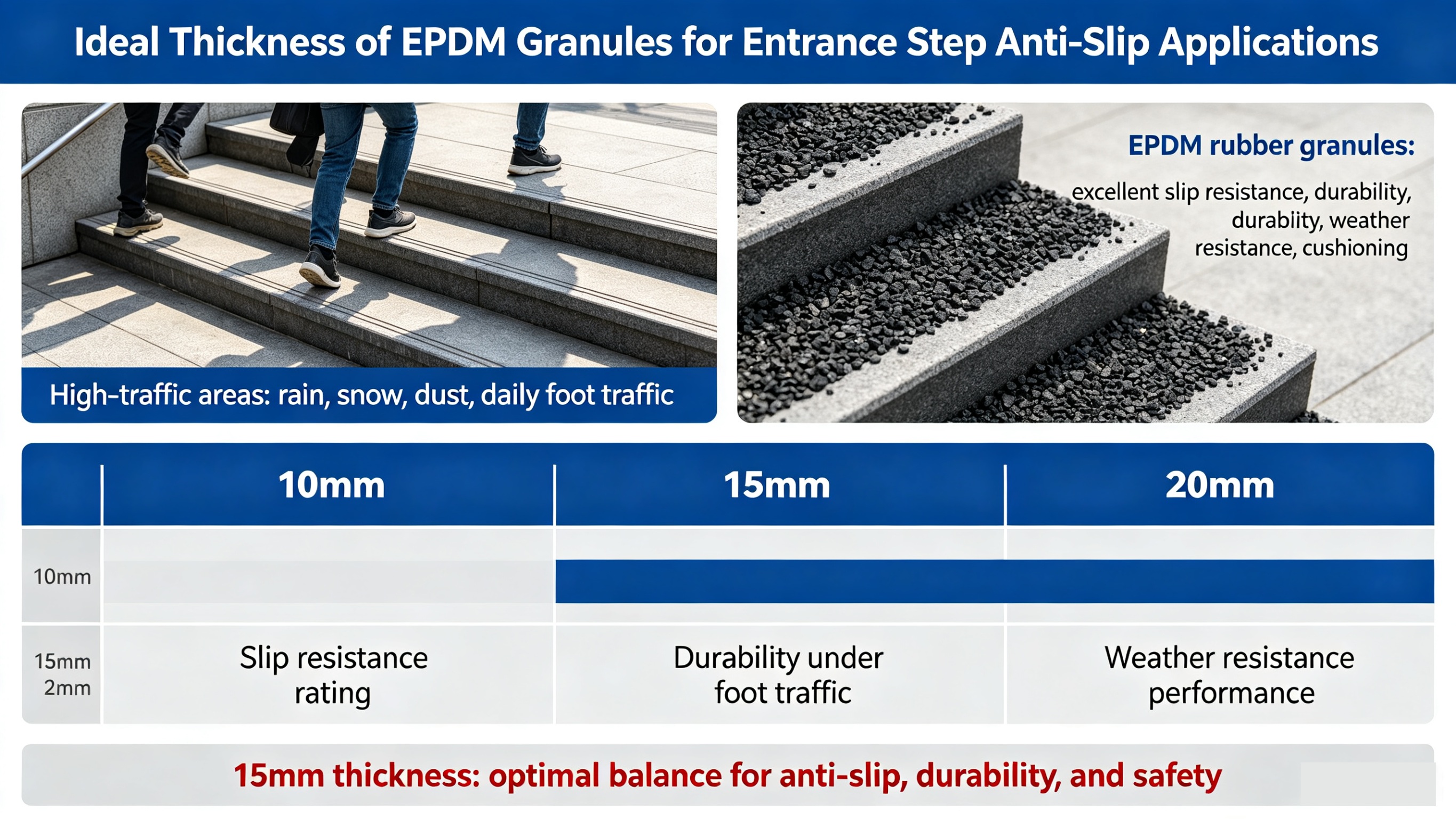
One of the most critical questions for property owners, contractors and builders is: what thickness of EPDM granules is ideal for entrance step anti-slip applications?
This article breaks down the optimal thickness standards, application scenarios and key considerations to help you make the right choice.Why EPDM Granules Work for Entrance Step Anti-Slip?
Before diving into thickness, it’s important to understand why EPDM granules dominate anti-slip step surfacing:• Superior slip resistance: The rough, porous surface creates high friction on both wet and dry steps, meeting international safety standards for slip resistance (EN 13036-4 friction coefficient ≥ 0.55).
• All-weather durability: Resists UV radiation, extreme temperatures, rain and frost, avoiding cracking, fading or deformation in outdoor entrance areas.
• Shock absorption: Soft rubber texture reduces impact fatigue from daily walking and minimizes injury risks from accidental falls.
• Low maintenance: Easy to clean, waterproof and quick-drying, ideal for busy building entrances with constant foot traffic.
• Customizable aesthetics: Available in vibrant colors to match step design and enhance overall entrance appeal.
Optimal EPDM Granule Thickness for Entrance Steps
The ideal thickness depends on traffic volume, usage intensity and safety requirements. Below are the industry-recommended thickness standards for different entrance step scenarios:1. Light-Traffic Residential Entrance Steps
For private homes, villas and low-traffic residential building entrances with minimal daily foot traffic:
Recommended thickness: 3–5 mm.
This thin layer delivers sufficient anti-slip performance without raising the step height excessively. It balances cost-effectiveness and basic safety, perfectly meeting the needs of household use. The thin EPDM coating adheres tightly to concrete/stone steps, resisting peeling and maintaining long-term stability.
2. Medium-Traffic Commercial & Public Entrance Steps
For offices, small shops, community centers and medium-traffic public building entrances:
Recommended thickness: 6–8 mm
This thickness adds extra wear resistance and durability to handle steady daily foot traffic. It enhances cushioning and extends service life, making it the most popular choice for commercial entrance step anti-slip projects. The 6–8 mm layer withstands repeated stepping and minor abrasion while retaining optimal slip resistance in wet weather.
3. High-Traffic Heavy-Duty Entrance Steps
For shopping malls, hospitals, schools, hotels and high-traffic public facility entrances, plus steps exposed to heavy use:
Recommended thickness: 9–12 mm
A thicker EPDM granule layer provides maximum durability, impact resistance and long-term performance. It withstands heavy, constant foot traffic, resists compression and wear, and delivers superior anti-slip and cushioning for high-safety areas. This thickness also offers better sound insulation, reducing noise from busy foot traffic.
Special Case: Sloped/Extra-Slippery Entrance Steps
For sloped entrance steps, areas with frequent water accumulation or high fall-risk locations (e.g., elderly care facilities, kindergartens):Opt for 8–10 mm thickness
Add a textured anti-slip top layer to boost friction, ensuring maximum safety in wet or sloped conditions.
Key Factors Affecting EPDM Granule Thickness Selection
1. Traffic intensity: Higher traffic requires thicker EPDM granule surfacing to avoid rapid wear and tear.2. Weather conditions: Rainy, snowy or humid regions need slightly thicker layers to maintain long-term slip resistance and structural integrity.
3. Base material: Smooth concrete/stone steps may need a 1–2 mm thicker layer for better adhesion; rough bases can use the standard recommended thickness.
4. Budget constraints: Thicker layers cost more, so balance thickness with your budget while prioritizing core safety needs.
5. Step height: Avoid overly thick layers that alter original step height and create tripping hazards.
Installation Tips for EPDM Granule Anti-Slip Steps
• Surface preparation: Clean and dry the step surface, removing dust, oil and loose debris to ensure strong adhesion.• Professional construction: Use professional EPDM granule paving techniques to ensure even thickness and consistent anti-slip performance.
• Adhesive selection: Choose high-quality, weather-resistant special adhesive for EPDM rubber to prevent layering peeling.
• Curing time: Allow full curing after installation (usually 24–48 hours) before opening to foot traffic.
Conclusion
For entrance step anti-slip surfacing with EPDM granules:• Residential (light traffic): 3–5 mm
• Commercial (medium traffic): 6–8 mm
• High-traffic public areas: 9–12 mm
Selecting the right thickness ensures long-lasting anti-slip performance, durability and cost efficiency. Always prioritize safety and align thickness with actual traffic and environmental conditions.
As a professional EPDM granule supplier, we provide customized solutions and technical guidance for entrance step anti-slip projects—contact us today for a tailored quote and expert support!
