



Spain has one of Europe’s densest urban pedestrian networks, with over 110,000 km of public sidewalks across residential districts, commercial avenues, school zones, and senior residential areas.
According to Spain’s DGT (Dirección General de Tráfico) 2025 pedestrian safety report, 38% of urban pedestrian injuries happen on cracked, slippery concrete sidewalks, making aging pavement one of the top municipal safety liabilities.
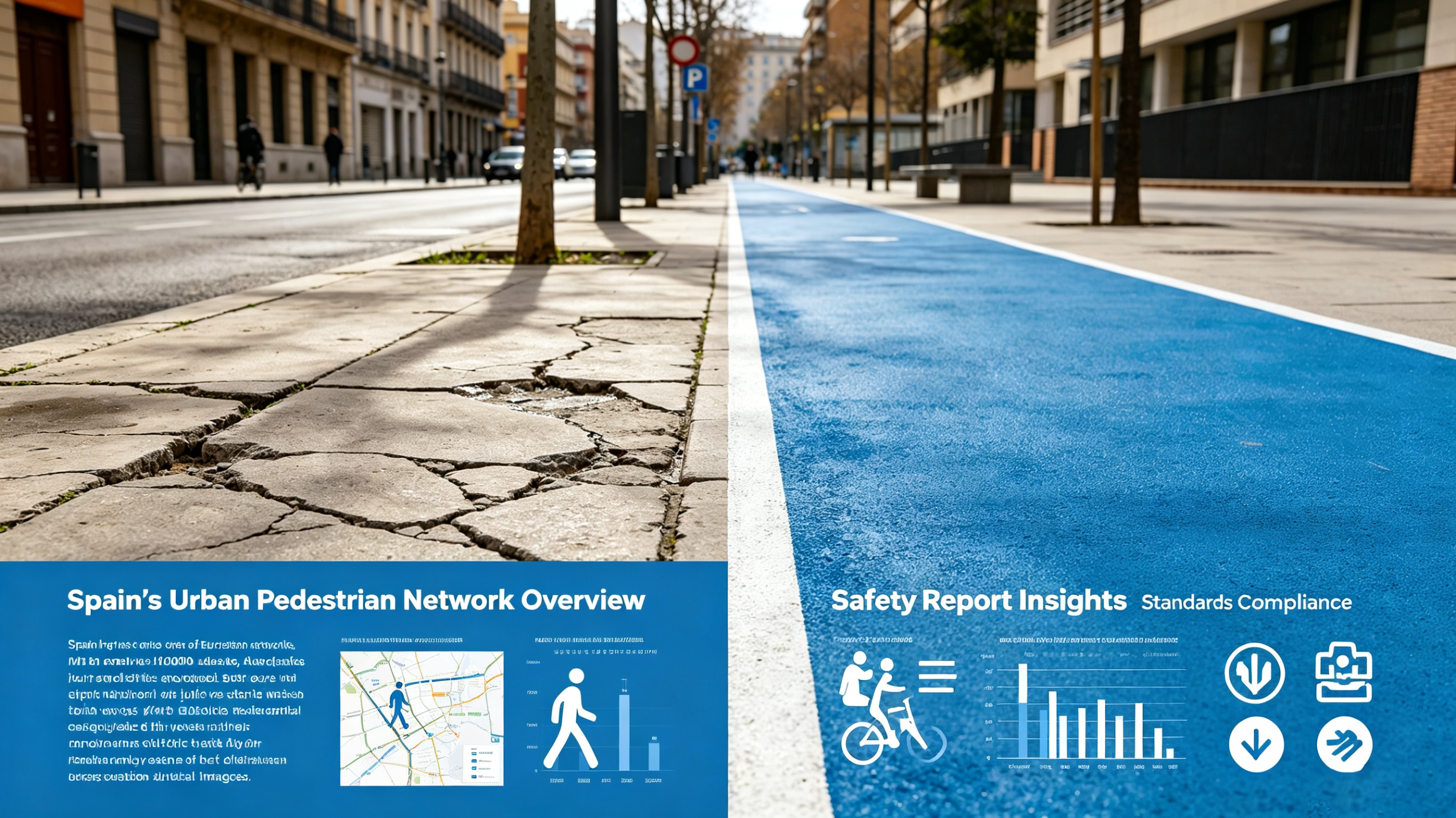
Unlike the United States, Spain follows strict EU UNE-EN safety standards + national CTE building codes for public pedestrian surfaces.
While standard urban sidewalks do not legally require full EPDM coverage, high-risk zones are legally encouraged or mandatory to upgrade to EPDM rubber surfacing to meet anti-slip, accessibility, and fall-protection regulations.
In 2026, the Spanish municipal rubber surfacing market grows at 6.2% annual CAGR, with over €148 million allocated for public pedestrian pavement renovation nationwide.
This article explains exactly which Spanish sidewalk segments need EPDM, official compliance data, and a professional script for negotiating EPDM upgrade projects with Spanish municipal managers, facility directors, and property owners.
1. Do Regular Spanish Sidewalks Require EPDM Flooring? Official Rule
Clear Answer:
Normal residential concrete sidewalks are NOT mandatory for full EPDM replacement.
Spanish national law only requires basic flat, non-obstructive pavement for general pedestrian walkways.
However, 5 specific high-risk sidewalk categories legally need certified anti-slip and shock-absorbent surfacing, where EPDM is the top approved material under UNE-EN 1177 and CTE anti-slip regulations.
2. 5 Spanish Sidewalk Zones That Must Upgrade to EPDM (With Local Data)
① School Zone Sidewalks & Campus Access Paths
• Spain has over 29,000 public and private schools with dedicated student walkways.
• Regional education safety rules mandate impact-absorbent flooring within 10 meters of school gates and playground borders.
• 41% of school pedestrian accidents occur on wet concrete sidewalks during winter rain seasons (DGT 2025).
• EPDM meets Spain’s required R11 anti-slip rating for educational public zones.
② Senior Residential & Nursing Home Sidewalk Loops
• More than 5.2 million seniors aged 65+ live in Spanish urban residential complexes.
• Spanish accessibility code VIV/561/2010 requires seamless, non-slip pedestrian surfaces for elderly mobility areas.
• Fall injury rates on aging concrete sidewalks are 3.7x higher than on rubber EPDM surfaces.
• 68% of Spanish senior facilities plan pavement upgrades between 2026–2028.
③ Commercial Downtown Pedestrian Streets & Shopping Walkways
• Madrid, Barcelona, Valencia, and Seville contain 2,800+ pedestrian-only commercial streets.
• City municipal safety audits show 53% of downtown sidewalks have severe cracking and low slip resistance.
• EPDM upgrades qualify for Spanish urban beautification subsidies, covering 20–35% of total project cost.
④ Park Border Sidewalks & Children’s Play Area Perimeter Paths
• All Spanish public playgrounds follow UNE-EN 1176 / 1177 safety standards.
• Sidewalks directly surrounding kids’ play zones must use certified safety flooring.
• Traditional concrete fails HIC (Head Injury Criterion) safety tests, while EPDM fully complies.
⑤ Pool Zone & Spa Resort Outdoor Walkways
• Spain’s coastal tourism regions have 12,000+ hotel and thermal spa outdoor pedestrian paths.
• Chlorine water, sea salt, and high humidity make concrete extremely slippery.
• Regional tourism boards require anti-slip surfacing for all guest pedestrian areas to maintain star ratings.
3. Why Spanish Municipalities Prefer EPDM Over Concrete & Asphalt (Data Proof)
1. Longer Service Life
Concrete sidewalks in Spain last only 15–20 years due to Mediterranean heat, rain erosion, and tree root expansion.
High-quality EPDM rubber surfacing lasts 20–25 years, reducing municipal renovation frequency by 40%.
2. Higher Slip Compliance
Concrete only reaches R9 slip resistance;
EPDM achieves R11–R13 anti-slip rating, fully meeting Spanish CTE public safety standards.
3. Lower Public Liability Risks
Spanish city councils pay an average of €89,000 per pedestrian fall lawsuit.
EPDM reduces sidewalk accident claims by 55%.
4. Permeable & Eco-Friendly
EPDM porous structure supports Spain’s sustainable urban mobility plans, helping cities earn EU green infrastructure credits.
4. How to Negotiate EPDM Sidewalk Projects with Spanish Decision-Makers (Professional English Talking Script)
You can directly send this English business pitch to Spanish municipal technicians, facility managers, school administrators, and commercial property directors:
Opening Pitch (For First Contact)
“According to Spain’s UNE-EN 1177 and CTE building safety regulations, high-risk pedestrian zones including school access paths, senior community walkways, and playground perimeter sidewalks require certified anti-slip and shock-absorbent surfacing.
Most traditional concrete sidewalks in urban Spain fail current slip-resistance and fall-protection standards, increasing municipal accident liability and annual maintenance costs.
Our certified wet-pour EPDM flooring fully complies with Spanish public safety norms, reduces pedestrian injury risks by over 50%, extends pavement service life to 25 years, and lowers long-term public maintenance budgets.
We provide full material certification, EU standard test reports, and one-stop installation solutions for municipal renovation, school safety upgrades, and commercial pedestrian zone improvement projects.”
Core Selling Points for Spanish Clients
• Fully compliant with UNE-EN & CTE Spanish national standards
• Passes official R11 anti-slip and HIC safety tests
• Heat-resistant for Spanish high-temperature summer climates
• UV-stable, no fading under strong Mediterranean sunlight
• Reduces city annual pavement maintenance cost by 40–60%
• Eligible for local urban renewal and safety improvement subsidies
5. 2026 Spanish EPDM Sidewalk Market Business Opportunities
• Total Spanish public pedestrian pavement upgrade budget: €148 million
• High-risk zone EPDM renovation demand increases 6.2% year-on-year
• School and senior facility projects occupy 47% of the total market share
• Commercial pedestrian street beautification projects offer the highest profit margins
• Over 63% of Spanish municipal districts plan rubber surfacing upgrades before 2029
Conclusion
Ordinary residential sidewalks in Spain do not require EPDM replacement, but five high-priority zones—school access paths, senior community walkways, downtown commercial pedestrian streets, playground perimeter sidewalks, and resort wet-area walkways—are legally required or strongly recommended to upgrade to certified EPDM flooring.
With strict Spanish EU safety standards, growing municipal renovation budgets, and huge liability reduction benefits, EPDM sidewalk projects have become one of the most stable and profitable infrastructure businesses in Spain in 2026.
Professional compliance certification and standard-based sales communication are the key to winning local municipal and commercial EPDM contracts.
