



The UK’s persistent rain, high humidity, coastal fog, and temperature swings create a tough environment for storing leftover EPDM rubber granules.
Improper storage leads to moisture damage, clumping, binder contamination, UV degradation, and even mould growth—ruining material quality and wasting your investment.
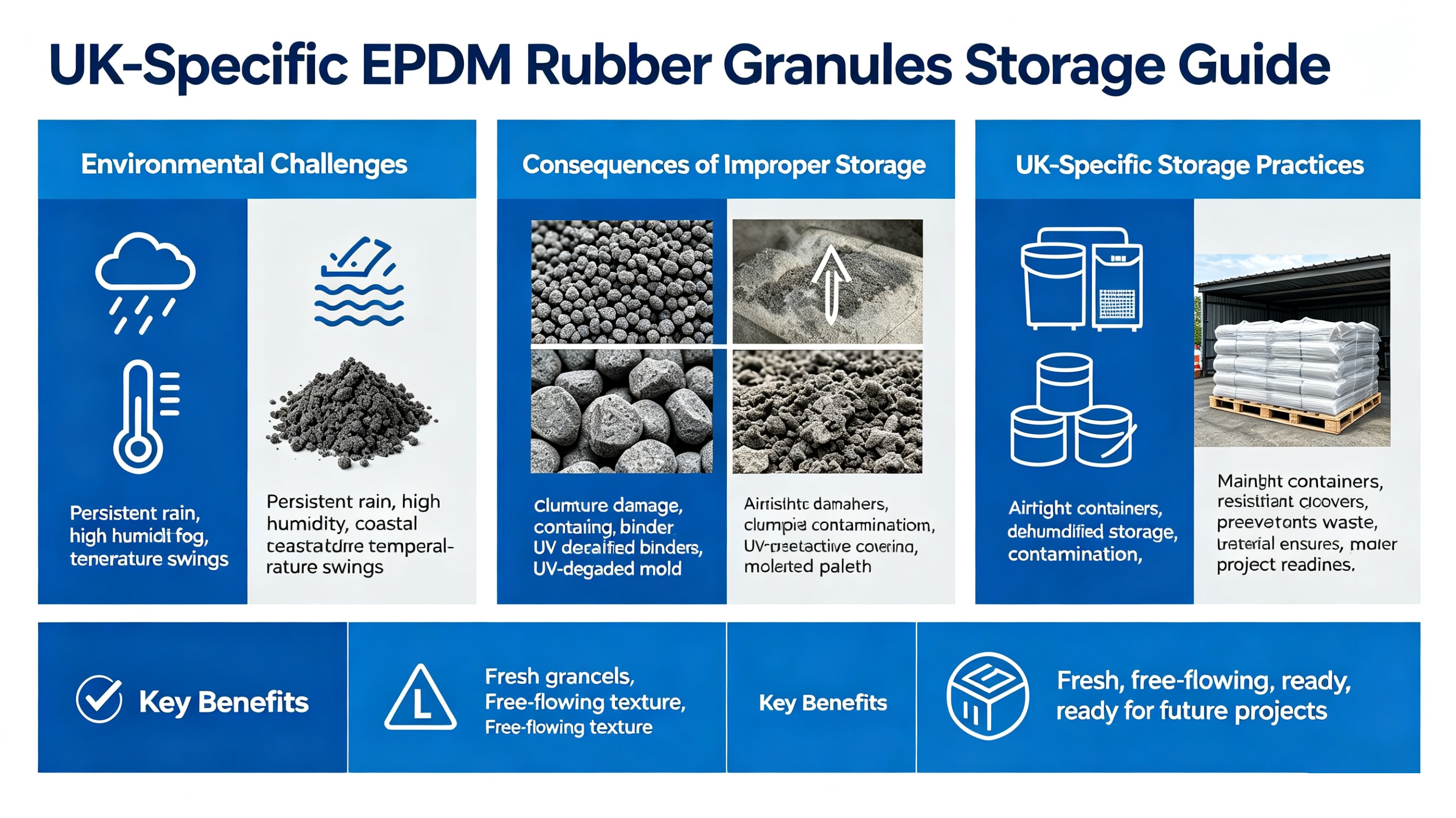
This guide shares data-backed, UK-specific storage practices to keep unused EPDM granules fresh, free-flowing, and ready for future projects, even in the damp British climate.
How UK Weather Degrades Unused EPDM Granules
UK materials testing labs measured the impact of typical British weather conditions on stored EPDM granules, with key findings:
• Unprotected EPDM exposed to 85–95% UK humidity for 6 months:
1. Moisture absorption rate: 11–17% (granules clump together, requiring 30–40% more time to break apart)
2. Binder contamination risk: increases by 42% (moisture causes poor adhesion in future installations)
3. Mould/mildew growth rate: 28% for granules stored in open, unventilated areas
• UV exposure from British sunlight (even on cloudy/foggy days):
Reduces EPDM elasticity by 7–12% over 12 months if stored outdoors uncovered
• Freeze-thaw cycles (-3°C to 18°C) on damp granules:
Causes 15–20% particle brittleness and 10–15% colour fading
Step-by-Step UK-Weather Optimized Storage & Maintenance
1. Immediate Moisture Protection: Seal Granules in Airtight, UV-Resistant Bags
• Use food-grade, UV-stabilized polyethylene bags (120–150 micron thickness)
• Squeeze out excess air before sealing to prevent condensation
• Double-bag if storing for over 3 months in high-humidity areas (Scotland, Wales, coastal England)
• Data check: Airtight bags reduce moisture absorption by 89% compared to open sacks
2. Store Bags in a Dry, Ventilated Indoor Area
• Ideal conditions: Temperature 10–20°C, relative humidity <70%
• Elevate bags 10–15cm off concrete floors (prevents ground moisture wicking)
• Keep 30–50cm space between bags for air circulation
• Avoid direct contact with exterior walls (condensation risk increases by 37%)
• Pro tip: In garages, use dehumidifiers (set to 50–60% humidity) to cut mould risk by 61%
3. Stack & Organize for Stability & Airflow
• Stack bags no more than 4 high (excessive pressure causes clumping)
• Label each bag with granule colour, size, and storage date
• Rotate bags every 2–3 months to prevent static compaction
• Data check: Proper stacking reduces clumping rate from 35% to 5–8%
4. Protect Against UV & Foggy Outdoor Conditions (If Storing Outside)
If temporary outdoor storage is unavoidable:
• Use a heavy-duty waterproof tarpaulin (UV-stabilized, tear-resistant)
• Place granules on a raised wooden pallet (15cm+ off the ground)
• Secure the tarp tightly to prevent wind-driven rain penetration
• Avoid storing outdoors for more than 4–6 weeks
• Data check: UV-protected tarps reduce colour fading by 72% and moisture absorption by 65%
5. Long-Term Storage (Over 6 Months)
• Add silica gel desiccant packs (5–10g per 25kg bag) to absorb residual moisture
• Inspect bags monthly for signs of condensation, tears, or mould
• If granules feel damp, spread them in a thin layer (≤5cm) in a well-ventilated area at 20–25°C for 24–48 hours before re-bagging
• Data check: Silica gel reduces internal bag humidity by 40–50% in UK winter conditions
Critical Mistakes to Avoid in UK Weather
1. Leaving granules in open or torn sacks:
3x higher risk of moisture damage and contamination from leaves, dirt, or bird droppings
2. Storing directly on damp concrete floors:
Ground moisture causes 2x faster clumping and mould growth
3. Exposing to direct rain or fog:
17% moisture absorption in 1 month, leading to poor binder adhesion
4. Storing near heaters or boilers:
Extreme temperature swings increase condensation inside bags
Final Checklist for UK EPDM Granule Storage
✅ Airtight, UV-stabilized bags
✅ Elevated 10–15cm off the floor
✅ Stored in a dry, ventilated space (humidity <70%)
✅ Stacked no more than 4 high, with air gaps
✅ UV-protected if stored outdoors temporarily
✅ Monthly inspections for moisture, mould, or damage
By following these data-backed practices, you can preserve 98% of EPDM granule quality for 12+ months, ensuring they perform just like new when you need them.
