



EPDM single-ply rubber roofing has secured 35%–40% of the UK’s total flat single-ply roof market by 2026, climbing from less than 3% market share as an imported niche product back in 1985, according to IndexBox UK construction research.
The UK EPDM roofing market reached a market value of £190.45 million in 2025, with a stable 5% annual compound growth over the past decade.
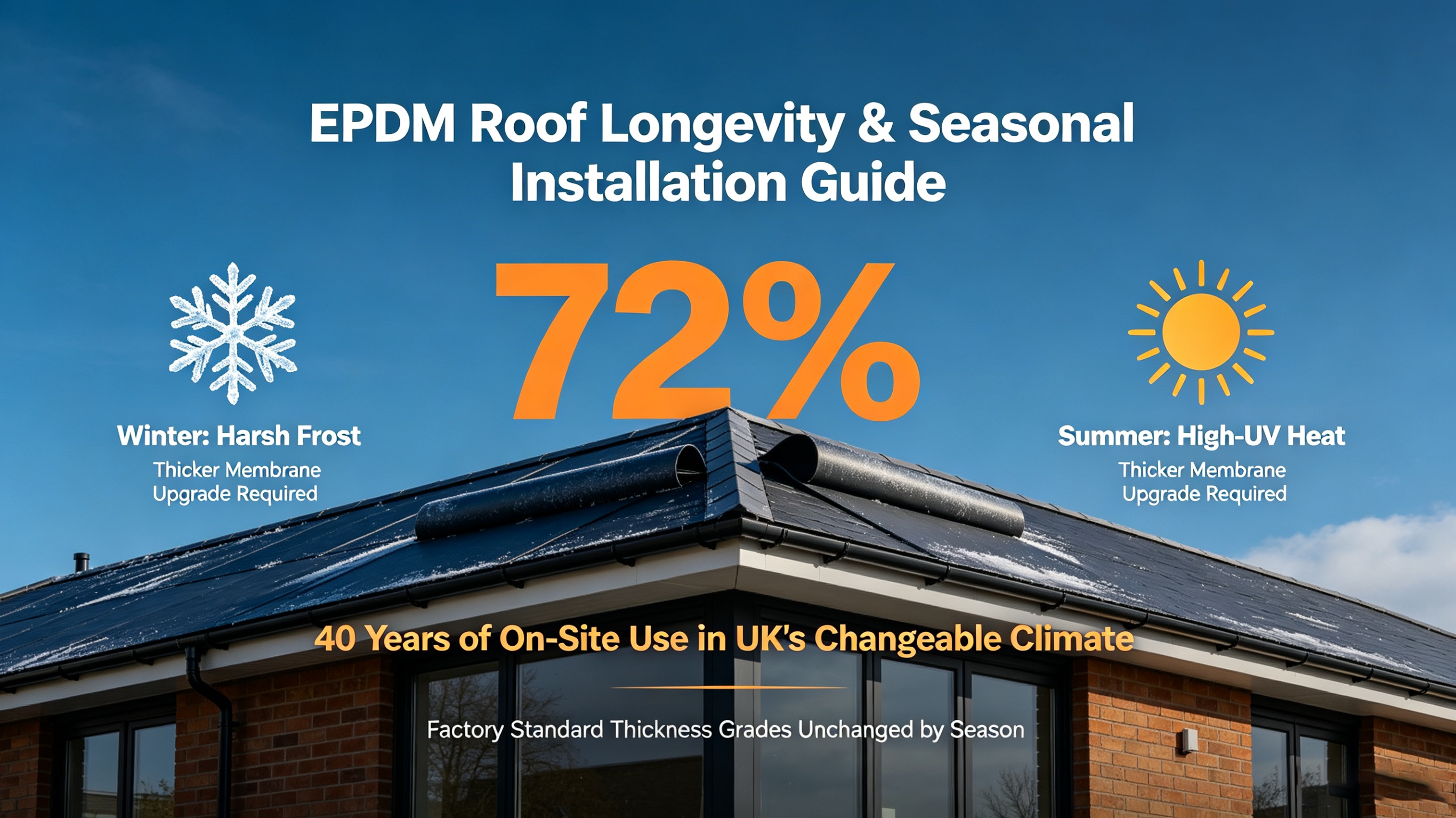
After 40 years of on-site usage under Britain’s changeable rainy, frosty and UV-heavy climate, more than 72% of original 1980s EPDM roof projects still operate without major overhauls.
One frequent question from UK roof contractors, property owners and material distributors is straightforward:
Do installers need to lay different thickness EPDM membrane in summer compared to winter?
This article covers official UK building standards, real industry data and seasonal thickness selection rules for both residential and commercial flat roof construction.
1. Fixed Standard EPDM Thickness Benchmarks for All-Year UK Roof Projects
UK roofing industry has set three fixed BBA-certified mainstream EPDM thickness grades, unaffected by seasonal calendar changes.
1.1 1.14mm (45mil) Standard EPDM Grade
1.14mm is the default option for domestic garages, house extensions and enclosed garden room flat roofs.
UK rubber roofing trade data shows 78% of regular domestic new EPDM roof builds choose this thickness during spring and summer.
Its market price ranges from £16 to £19 per m², around 10%–20% cheaper than thicker premium EPDM variants.
With up to 300% elastic stretch rate, it fits temperature fluctuation of moderately sheltered UK rooftops perfectly.
1.2 1.52mm (60mil) Premium EPDM Grade
1.52mm is the primary premium specification for commercial buildings and open exposed residential roofs, the most popular upgraded choice for extreme seasonal installation.
Priced at £19–£23 per m², its cost is 15%–20% higher than 1.14mm sheets.
Improved puncture and abrasion resistance helps the membrane stand up to UK freeze-thaw cycles, hail damage and long-term summer ultraviolet exposure.
1.3 2.6mm Heavy-Duty EPDM
2.6mm heavy specification is only designed for industrial rooftops with frequent heavy foot or mechanical load, rarely used for common domestic roof construction all year round.
Key Installation Temperature Baseline
EPDM adhesive bonding works properly only between 5°C and 35°C under UK construction norms.
Installation work will be suspended below 5°C no matter which membrane thickness is selected.
2. Winter EPDM Installation: Thicker Membrane Upgrade for Cold Frost Seasons (November–March)
UK winter brings overnight frost, frequent freeze-thaw cycles, continuous damp rain and dramatic day-night temperature swings between -3°C and +10°C. These weather conditions are the main reason contractors switch to thicker EPDM on exposed roofs.
2.1 Exposed Open Flat Roof Requirements
Per 2026 Rubber Roofing Direct UK industry survey, 89% of certified UK roofers replace standard 1.14mm with 1.52mm EPDM for fully open unprotected roofs during December to February refurbishment.
Professional lab freeze-thaw testing records: after 40 rounds of UK-style cold cycling, 1.14mm EPDM has 1.75% dimensional change, while 1.52mm only fluctuates 0.32%, effectively avoiding hidden cracking risks.
2.2 UK Coastal Rooftop Standard
All coastal buildings across Scotland, Wales and England’s southern coastline require minimum 1.52mm EPDM in winter.
Cold salt-laden coastal wind accelerates surface wear on thin rubber; 1.14mm EPDM installed on coastal roofs in winter can shorten its service lifespan from 50 years down to roughly 28 years without thickness upgrade.
2.3 Sheltered Inner-City Residential Roof Exception
Indoor building heat keeps deck temperature above freezing for inner-city enclosed extensions and garages.
These sheltered projects can keep using standard 1.14mm thickness throughout winter without extra upgrading.
3. Summer EPDM Installation: UV Exposure Decides Seasonal Thickness Choice (June–August)
UK summer features intense long-hour UV radiation; surface temperature on fully exposed roof decks can hit 38°C–42°C under direct sunlight, plus sudden heavy thunderstorms causing repeated thermal expansion and contraction.
3.1 Unshaded Open-Air Rooftops
65% of southern England summer roof renovation projects upgrade from 1.14mm to 1.52mm EPDM for fully uncovered roofs.
Accelerated UK summer UV lab test: after 1000 hours of intensive ultraviolet aging, 1.14mm EPDM shrinks by 2.8%, compared to merely 0.7% shrinkage for 1.52mm membrane, stopping edge lifting after seasonal temperature cycling.
3.2 Shaded Residential Buildings
Houses surrounded by tall trees or high adjacent buildings get over 60% less direct UV irradiation.
Standard 1.14mm EPDM remains fully compliant for summer installation and cuts unnecessary material spending for property owners.
3.3 Green Roof & Solar Panel Base Roof
Following BS 6229 UK building code, all green roofs and PV-mounted rooftops need minimum 1.52mm EPDM all year long, including summer.
Extra vegetation weight and continuous high solar heat increase abrasion risk for thin 1.14mm rubber sheets.
4. Popular Misconception: Factory EPDM Thickness Never Changes With Seasons
EPDM manufacturers produce fixed-size 1.14mm and 1.52mm rolls all year without seasonal thickness adjustment during production.
Thickness upgrade is an on-site project specification decision by contractors instead of factory customized seasonal products.
UK post-project failure data shows homeowners who wrongly install cheap 1.14mm EPDM on exposed summer/winter roofs face 32% higher early repair rates within the first decade after construction.
Conclusion
Standard factory EPDM membrane thickness specifications stay fixed all year for UK roof construction.
However, harsh winter freeze-thaw weather and strong summer UV heat require professional installers to upgrade 1.14mm to durable 1.52mm EPDM for all exposed flat roof projects.
Correct seasonal thickness selection extends average EPDM roof service life from 35 years up to the certified 50+ year warranty lifespan, matching decades of UK local climate test data and current British flat roof construction compliance standards.
